
Biophilic Design: Architecture Connecting Us With Nature
> » Blog » Biophilic Design: Architecture Connecting Us With Nature
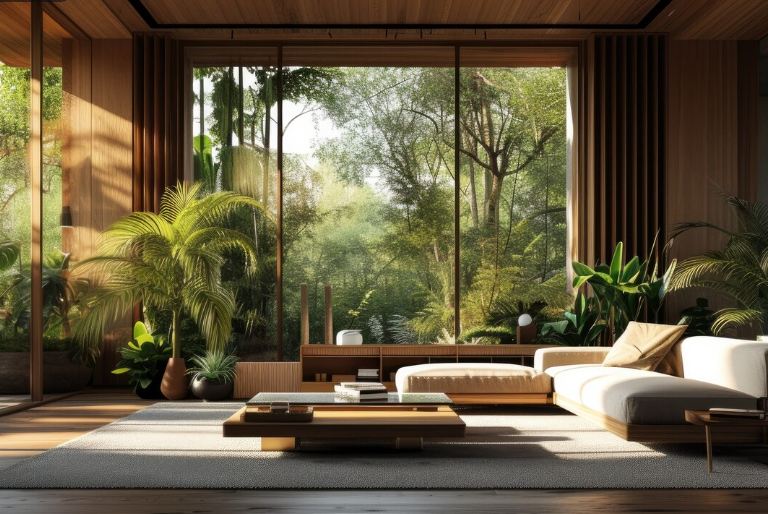
Have you ever noticed how your mood shifts when you enter a space flooded with natural light vs a very dark one? It’s not a coincidence. What you feel is your instincts responding to biophilic design, a discipline that has gone from décor magazine trend to backbone of modern high-end architecture.
In cities, we spend nearly 90% of our time indoors, surrounded by walls, with artificial lighting and recycled air. This disconnection from our natural environment ends up taking its toll: stress levels rise and our ability to concentrate falls.
That’s why at Bonavista Developments, when we design buildings like Dmoura, we do so always bearing in mind how that building can help you connect with nature and improve your daily life.
What exactly is biophilic design?
If you’re looking for a formal, technical answer to the question what is biophilic design, you could say that it is the integration of nature into the built environment. However, if we get down to brass tacks, it is much simpler. The term comes from biophilia, which means “love of life.” So, in architecture a biophilic design is one crafted for loving life, i.e., everything related to nature, including us. In fact, that is its main goal, people’s wellbeing.
Biophilic design in architecture seeks to break up the glass, brick, and concrete boxes that urban spaces sometimes become. It’s not enough to simply put a few plants in the corner, it’s about creating a design that leverages light, air, materials, and shapes so your brain feels that you are in a calm, living place.
Applications of the main tenets of biophilic design in modern architecture
As mentioned previously, you can’t just fill a space with plants and call it a biophilic design. This kind of architecture is guided by the so-called 14 patterns of biophilic design, which are like a roadmap for architects and interior designers. These patterns can be classified into three main blocks:
- Nature in the space: what you see and touch
- Natural analogs: what reminds you of nature
- The nature of the space: how you feel in it.
Natural light as nervous system regulator and efficiency booster
Constant exposure to artificial light strains the eyes and the mind. That’s why one of the most important tenets of biophilic design is light management.
Specifically, in our projects, letting light in is a priority. We aim to drench spaces with sunlight, so you can see the way the light changes over the course of the day. This helps to regulate your circadian rhythm, improve your sleep, and, of course, reduce stress.
Natural materials and organic textures
Natural materials carry a sensory weight that plastic and metal cannot imitate, try as they might. Solid wood, marble, and plant fibers are basic elements in biophilic interior design. These elements offer a warmth that makes us feel at home, even in an office setting.
Finally, surrounding yourself with textures from nature helps to disconnect from the visual noise of the city and unconsciously reduces stress.
Biophilic design in offices: your productivity will thank you
If you work in a closed-off, gray environment, your brain has to make an extra effort to concentrate. Biophilic design in office spaces, on the other hand, acts as an energy enhancer. It has been proven that incorporating natural elements into the workspace can boost productivity by up to 15%.
How do we do it at Dmoura?
- Connection to nature: we design terraces where you can head outside to work, breathe some fresh air, and feel the sun on your skin.
- Natural shapes: we avoid aggressive right angles and seek out fluidity in spaces.
- Quality of life: we create offices that breathe so that you can too. You’ll only work well if you feel good while doing it.
Biophilic design at home: your personal retreat
Your home should be the place where you disconnect from the noise of the world. Your refuge, not your prison cell. And to do that, it should be connected to nature. You don’t need to live in the middle of a forest to achieve this, though, all you need to do is organize your interior space in a way that most benefits your wellbeing:
- Once again, light is a fundamental pillar. Open the curtains, let the light take the lead.
- Create small corners with natural elements in spaces that were once empty. Thinking beyond plants doesn’t mean they have no importance in biophilic design principles.
- Air and ventilation: if you’re looking for a new home, check to see how well it is ventilated and if it has an opening to the outside.
- Biophilic interior design: ensure the materials you choose convey calm, use colors you’d find in a landscape (greens, earth tones, blues), and avoid industrial grays.
Biophilic design as a wellbeing mainstay: the new real estate standard
After spending so much time inside during the pandemic, we’re seeing a rise in biophilic design. And that makes sense. The places where we spend most of our lives should make us feel good. And biophilic designs do just that.
Biophilic architecture and wellbeing go hand in hand. When you choose a home or office with a biophilic design, you’re saying that you want a cleaner, visually quieter space and a constant connection to nature. You’re automatically investing in your wellbeing and even your own longevity. But not only that. You’re also investing in a space that will never go out of style, because it meets an essential human need that is likely to be increasingly necessary in modern society.
Bonavista’s commitment to biophilia
At Bonavista Developments, we couldn’t imagine building in any way other than using biophilic design both in residential architecture and the corporate sector. Our goal is always the same: when you step into one of our buildings, your shoulders will drop, you’ll take a deep breath, and somehow, you’ll feel “at home.”
We commit to projects where wellbeing is not just an added value, but a lynchpin. Designs made for and by people to boost quality of life. That’s why we always search for architecture that facilitates this connection with nature, even in the city center, raising quality of life and efficiency standards.
If you’d like to see how that translates to a professional environment, have a look at Dmoura. Experience how light management and natural design can transform your business’ dynamic. The modern workplace is no longer an inert environment; it is a living, biophilic system.
We invite you to discover our homes and visit Dmoura so you can see firsthand how the integration of natural elements completely changes your experience of a space. It’s time to leave inert environments behind and opt for spaces designed for people.