
Common Components: A Technical and Legal Guide Per the Horizonal Property Act
> » Blog » Architecture and Design » Common Components: A Technical and Legal Guide Per the Horizonal Property Act
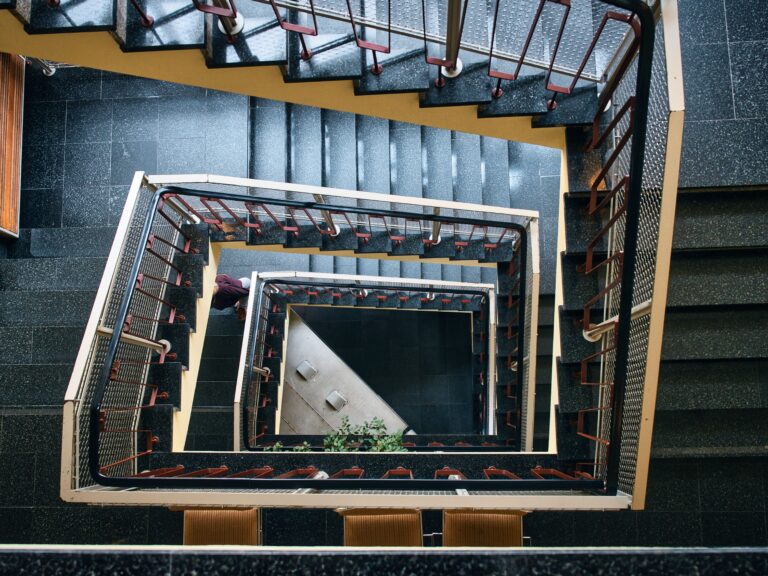
When buying, selling, or living in a property, one of the main sources of doubt and conflict among neighbors is the line between private and collective property, especially in historical heritage buildings such as stately homes. This has direct bearing on determining who pays for maintenance, repair costs, and limitations when doing work, so it is important to understand what components are considered common property in a building.
In this post we provide a detailed analysis and legal definition, the list of components protected by law, the particularities regarding balconies, terraces, and roofing, and current homeowners’ association regulations.
What is a common component and how is it defined in the law?
A common component is a service, space, or structure on a property that does not exclusively belong to a single homeowner. It is instead used or enjoyed by the entire building or otherwise supports the building.
In Spain, the regulatory framework to demarcate these areas or common components is set out in Article 396 of the Civil Code and the Horizontal Property Act. According to Article 396 of the Civil Code, each apartment or commercial space has the singular right of property over its defined space and, inseparably, co-ownership over the common components of the property necessary for proper use and enjoyment.
Each apartment is assigned a participation coefficient over the entire building, which serves to determine their contribution to the payment of the general homeowners’ association costs and the weight of their vote during homeowners’ association meetings.
Inventory of common components per Article 396 of the Civil Code
The Civil Code provides an exhaustive, albeit open list of the components legally considered to be common. They are divided into various functional categories for easier understanding:
1. Structural and foundation components
These are the backbone guaranteeing the building’s safety and stability. They include:
- The land, loadbearing walls, walls, trenches, courtyards, and wells.
- The solid ground on which the building stands, the load-bearing walls, as well as walls, trenches, courtyards, and wells.
- The essential structural components: pillars, beams, and top slabs. As these components are directly responsible for the property’s overall stability, no owner can perforate or modify them without express, unanimous authorization from the homeowners’ association. In complex renovation projects, protecting these components is a priority to ensure architectural integrity, as occurs when renovating a historical building without sacrificing its charm.
2. Architectural components, facade, and enclosures
These components close the property off from the outside and set the boundary:
- The main facade, exterior walls, coverings, and ornamental architectural components.
- The roof and finishing structures.
3. Transit areas and entryways
Areas dedicated to movement or at the service of co-owners, including entrances, stairways, reception areas, corridors, hallways, passageways, and meter enclosures.
4. Shared services and facilities
These include supply networks and the equipment necessary for habitability, i.e.:
- Heating, air conditioning, ventilation, electricity, plumbing, and sewer systems up to the entrance into the apartment or commercial space.
- Elevators, tanks, meters, telephony systems, and the intercom system.
- Ventilation and smoke exhaust systems, shared antennae, and telecommunications systems.
Frequently asked questions: What components are shared and what components are private?
The limit between what belongs to the home and what is part of the building can raise questions in certain cases, such as those mentioned below.
Are windows shared or private components?
One of the most common questions is whether windows are shared or private components. The answer is it depends:
- As a closure and ventilation mechanism for the home, windows are private property.
- However, as a part of the exterior image and aesthetic of the facade, they are considered a common component. That’s why windows must be replaced in strict accordance with the colors, shapes, and designs agreed upon by the homeowner’s association to not alter the building’s aesthetic or harm the property’s thermal and acoustic insulation.
Are the home’s doors a common component?
In terms of whether a home’s doors are a common component, the interior side of the door providing entry into the home and its lock are private. Nonetheless, the exterior side facing the common hallway must be the same color and aesthetic as that of the other residents, as occurs with the windows.
Balconies and railings
The railings on balconies are common components pursuant to the Horizontal Property Act, as they are part of the facade. Facade repair and painting the railings corresponds to the homeowners’ association, except when the wear and tear was caused by deliberate misuse by a neighbor.
Terraces, roofing, and private courtyards
Where exterior spaces are concerned, one must clearly differentiate between ownership of the property and right to use it.
Difference between private terrace and private use
Confusion between one use and another is very common on terraces. There is an important difference between a private terrace and private use:
- Private terrace: exterior space included in the title deed for an apartment, provided its surface area does not function as the building’s roof.
- Common courtyard for private use: space that legally belongs to the homeowners’ association, but whose physical access is reserved for the owners of certain apartments (usually ground floor and second floor units).
Horizontal Property Act: roofs, terraces, and balconies
According to the Horizontal Property Act, regarding roofs and terraces, the structure of the roof and ground slab is always a common component given their waterproofing and thermal insulation function.
Thus, the Horizontal Property Act considers terraces and balconies with exclusive use for one homeowner to be governed by the following allocation of expenses rule:
- Daily maintenance: Cleaning, leaf removal, and plot maintenance correspond to the user who is allocated exclusive use.
- Structural repairs: Repairing humidity remediation arising from wear and tear of the asphalt membrane or degradation of the floor slab is the financial responsibility of the homeowners’ association, provided there was no negligence on behalf of the user.
Construction and norms in common areas
Work on homeowners’ association common components
Any changes to the structure, load-bearing walls, or facade require authorization from the homeowners’ association. Work on homeowners’ association common components must be approved by the majority of the homeowners’ association or unanimously, as required by law, depending on whether they involve mandatory conservation measures, accessibility (such as elevator installation), or cosmetic improvements.
Terms of use for homeowners’ association common areas
The terms of use for homeowners’ association common areas are usually set by the bylaws or rules of procedure. These terms guarantee coexistence, cleanliness, and safety in shared spaces like yards, pools, and shared terraces.
The Horizontal Property Act in townhouses
One common error is thinking that homeowners’ association legislation only applies to high-rise apartment buildings. The Horizontal Property Act for townhouses and private housing developments (outstretched horizontal property) works exactly the same when there are shared components.
In these private housing developments, the foundations, contiguous roofing, wiring installations, meter enclosures, and sports areas and gardens are considered common services and facilities, and the costs of maintaining them must be distributed according to the participation coefficient assigned to each residence.
Final tip before buying
Now that you know what a building’s common components are, before purchasing a property, always ask for the minutes from the most recent homeowners’ association meetings. That way you’ll know if the property has any facade repairs pending, whether the building’s technical inspection has expired, and whether repairs need to be made on the structural components.
If you’re looking for projects where building quality, respect for architecture, and attention to detail are the top priorities, we welcome you to learn about our philosophy at Bonavista Developments, specialists in creating exclusive, timeless homes in Barcelona and on the Mediterranean coast. To experience it firsthand, take a look at our loft development in Can Ricart.